




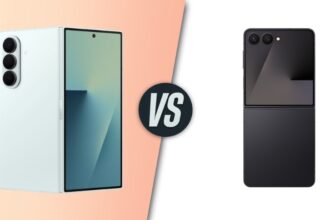


Choosing between an Android phone and an iPhone is one of the most common decisions smartphone buyers face. Both platforms offer powerful devices, excellent cameras, advanced security, useful artificial intelligence features, and access to millions of applications. However, they deliver these benefits in very different ways.
Android is available across a broad selection of brands, designs, and price ranges, giving buyers more control over the type of device they purchase. The iPhone, meanwhile, offers a more consistent experience built around Apple’s tightly connected hardware, software, and services. The better choice depends on your budget, preferred features, existing devices, and how much control you want over your phone.
Android vs iPhone at a Glance:
| Feature | Android | iPhone |
|---|---|---|
| Device Selection | Many brands, models, and designs | Limited, carefully managed lineup |
| Price Range | Budget to ultra-premium | Primarily mid-range and premium |
| Customization | Extensive interface customization | Simpler and more controlled |
| Software Updates | Depends on manufacturer and model | Generally consistent across supported iPhones |
| Ecosystem | Works with many brands and Google services | Strong integration with Apple devices |
| App Experience | Flexible installation and default-app choices | Consistent and closely managed |
| Cameras | More hardware variety and specialized features | Reliable photos and strong video performance |
| File Management | More desktop-like flexibility | Simpler but more restricted |
| Resale Value | Varies significantly by brand | Often stronger for popular models |
| Best For | Choice, flexibility, and varied budgets | Simplicity, consistency, and Apple integration |
1. Device Choice and Price Range:
Android offers far more variety than the iPhone. Because the operating system is used by manufacturers such as Samsung, Google, Motorola, OnePlus, Xiaomi, and others, buyers can choose from compact phones, foldable models, gaming devices, camera-focused flagships, and affordable everyday smartphones.
This selection makes Android especially attractive for shoppers with a specific budget. Entry-level devices can cover essential calling, messaging, social media, and streaming needs, while premium Android phones compete directly with high-end iPhones.
Apple offers fewer models, creating a simpler buying experience. Its lineup usually includes standard, premium, larger-screen, and previous-generation options. This limited selection may be easier to understand, but buyers looking for a low-cost new phone will generally find more choices on Android.
Choose Android for Pricing If:
- You need an affordable smartphone.
- You want to compare products from several brands.
- You are interested in foldable or gaming-focused designs.
- You want more storage, screen-size, or hardware combinations.
Choose iPhone for Pricing If:
- You are comfortable buying within the mid-range or premium market.
- You prefer a smaller and easier-to-compare product lineup.
- You plan to keep the device for several years.
- Long-term resale value matters to you.
2. Ease of Use:
The iPhone is often preferred by people who want a straightforward and consistent smartphone experience. Apple controls both the hardware and operating system, helping menus, applications, gestures, and settings feel similar across supported models.
This consistency can make the iPhone easier for first-time smartphone users, families managing several devices, or people who do not want to spend much time adjusting technical settings.
Android has also become highly user-friendly, but the experience differs between manufacturers. A Google Pixel may look and behave differently from a Samsung Galaxy or another Android phone. These differences provide more choice, although they can make switching between brands less seamless.
3. Customization and Personal Control:
Customization is one of Android’s strongest advantages. Users can change launchers, icon arrangements, widgets, keyboards, themes, default applications, and many other parts of the interface. Some phones also offer advanced multitasking, split-screen tools, desktop modes, and extensive home-screen controls.
Android continues to emphasize personalization, protection, and accessibility through features such as themes and customizable interfaces.
The iPhone provides widgets, lock-screen personalization, focus modes, and layout options, but Apple maintains greater control over how the operating system looks and functions. This results in a polished and predictable experience, although users who enjoy modifying every detail may find it restrictive.
Android Is Better for Customization If:
- You frequently reorganize your home screen.
- You want alternative app stores or launchers.
- You prefer choosing default apps and services.
- You want deeper file and system control.
iPhone Is Better for Simplicity If:
- You prefer a clean and consistent interface.
- You do not want to manage many technical options.
- You want settings to remain familiar after upgrading.
- You value convenience over extensive customization.
4. Software Updates and Long-Term Support:
Software support is an important consideration for anyone planning to keep a phone for several years. Apple distributes iOS updates directly to compatible iPhones, allowing supported models to receive features and security improvements without waiting for a mobile carrier or separate manufacturer.
Apple has continued to provide security releases for both current and older versions of iOS, including updates for devices that cannot run the newest operating system.
Android updates depend more heavily on the manufacturer and device model. Premium phones from leading brands may receive many years of operating-system and security support, while inexpensive or less popular models may receive fewer updates. Google notes that Android system updates and security patches are commonly installed automatically, but availability still depends on the device.
Buyers choosing Android should therefore examine the update policy for the exact model rather than assuming every Android phone receives equal support.
5. Privacy and Security:
Both platforms include strong security features such as encryption, biometric authentication, app permissions, device tracking, and regular security patches.
Apple places privacy at the center of its marketing and product design. Features include application tracking controls, privacy indicators, permission management, and systems intended to reduce how much personal data can be accessed.
Android also provides detailed permission controls, security updates, protected application installation, and privacy dashboards. Google regularly publishes Android security bulletins describing vulnerabilities and the patch levels that address them.
Neither platform is automatically secure under every circumstance. Security also depends on installing updates, using strong passwords, avoiding suspicious downloads, and selecting a device that still receives manufacturer support.
6. Camera Quality:
Both Android phones and iPhones can deliver excellent photography, but the experience varies by model.
Premium iPhones are known for dependable image processing, natural-looking results, strong video recording, and consistency when switching between cameras. They are particularly popular among content creators who record video for social platforms or need predictable results without adjusting many settings.
Android camera performance is more varied. Google Pixel phones often emphasize computational photography, while Samsung and other manufacturers may offer high-resolution sensors, powerful zoom systems, professional controls, or specialized shooting modes. Android 16 also introduced additional camera capabilities for supported hardware, including professional video features, precise color adjustments, hybrid exposure controls, and expanded Ultra HDR support.
The best camera choice should be based on specific phone models rather than the operating system alone.
Choose iPhone for Cameras If:
- You prioritize video quality.
- You want consistent point-and-shoot results.
- You frequently create content for social media.
- You prefer similar image processing across lenses.
Choose Android for Cameras If:
- You want advanced zoom options.
- You enjoy manual camera controls.
- You want to compare different camera-focused devices.
- You prefer more experimental photography features.
7. Applications and Everyday Services:
Most popular applications are available on both Android and iPhone, including social media platforms, banking apps, productivity tools, streaming services, and navigation apps.
The iPhone App Store offers a closely controlled experience, and developers often optimize apps for a relatively small range of Apple devices. This can contribute to consistent performance and design.
Android provides greater flexibility. Users may install applications from different sources, replace more default services, and access a wider range of device-specific tools. However, applications may behave differently across the enormous variety of Android hardware.
For ordinary users relying on mainstream applications, the difference is unlikely to be significant. Specialized users should confirm that their preferred professional, accessibility, business, or gaming applications work properly on the platform they choose.
8. Ecosystem and Device Integration:
The devices you already own may be the most important factor in your decision.
An iPhone works especially well with products such as the Mac, iPad, Apple Watch, AirPods, and Apple TV. Features can support file sharing, synchronized messages, cross-device calling, shared clipboards, and easy switching between Apple devices. Apple continues to develop its software features across iPhone, Mac, iPad, Apple Watch, and other products as a connected ecosystem.
Android provides a more open ecosystem involving Windows computers, Chromebooks, smart TVs, wearables, headphones, vehicles, and home devices from many manufacturers. Google promotes Android around connected services, protection, Google apps, and cross-device functionality.
The Apple ecosystem is generally more controlled and consistent, while Android gives users greater freedom to combine products from different brands.
9. Artificial Intelligence Features:
Artificial intelligence has become an important part of modern smartphones. Both Android manufacturers and Apple are integrating AI into writing assistance, image editing, search, translation, voice tools, notifications, and device automation.
Android’s AI experience can vary between manufacturers. Google services may provide visual search, voice assistance, photo tools, and contextual recommendations, while individual brands may add their own AI features.
Apple is expanding Apple Intelligence and Siri-related capabilities throughout its software ecosystem. However, feature availability may depend on the iPhone model, language, country, and operating-system version.
Buyers should not choose a phone based only on a broad “AI phone” claim. Check whether the exact features you need are available on the specific model and in your region.
10. Battery Life and Charging:
Battery performance depends more on the individual device than on Android or iOS. Large Android phones may include high-capacity batteries and fast wired charging, while some premium models offer reverse wireless charging and extensive power-saving controls.
iPhones are generally optimized to balance battery performance with Apple’s hardware and software. However, charging speeds and battery size differ between models.
Before buying, compare independent battery testing for the specific phones you are considering. Manufacturer claims may be based on different testing methods and are not always directly comparable.
11. Accessories, Repairs, and Resale Value:
iPhones benefit from a large accessory market. Cases, screen protectors, chargers, mounts, and other products are widely available because Apple sells a relatively limited number of phone designs.
Popular Android flagships also have extensive accessory support, but less common or budget models may offer fewer choices. Repair availability can similarly vary between Android brands.
iPhones often retain strong resale value, especially when kept in good condition and supported by current software. Some premium Android models also maintain value well, but depreciation can be faster across the broader Android market.
Pros and Cons of Android:
Pros:
- Large selection of brands and prices
- Extensive customization options
- More hardware designs and form factors
- Greater file-management flexibility
- Many choices for charging, cameras, and displays
- Easier integration with products from different brands
Cons:
- Software support varies by manufacturer
- User experience differs between brands
- Some low-cost models may receive limited updates
- Resale value can vary considerably
- Preinstalled applications may differ by device
Pros and Cons of iPhone:
Pros:
- Consistent and easy-to-use interface
- Strong integration with other Apple products
- Reliable software and security updates
- Excellent video recording
- Large accessory selection
- Strong resale value for many models
Cons:
- Fewer device choices
- Limited budget options
- Less interface and system customization
- Repairs and accessories can be expensive
- Best ecosystem features often require other Apple products
Which One Should You Choose?
Choose Android If:
- You want more control over your phone.
- You need a device at a specific budget.
- You want foldable, gaming, stylus, or specialized hardware.
- You prefer Google services or Windows integration.
- You enjoy customizing your interface.
- You want to compare several brands before buying.
Choose iPhone If:
- You already use a Mac, iPad, Apple Watch, or AirPods.
- You prefer a simple and consistent experience.
- You value long-term software support.
- You frequently record videos.
- You want strong resale potential.
- You do not need extensive system customization.
Helpful Tips Before Buying:
Avoid choosing solely based on brand popularity. Instead, compare two or three specific models within your budget.
Check the display size, battery performance, storage capacity, camera features, repair options, update policy, and warranty coverage. Consider how much storage you will need because upgrading internal storage after purchase is usually impossible.
It is also helpful to hold the phones in person. A device may look attractive online but feel too large, heavy, or uncomfortable during everyday use. Finally, consider the products and subscriptions you already own, as switching ecosystems may involve replacing accessories or transferring paid services.
Final Verdict:
Android and iPhone are both excellent choices, but they serve different types of users. Android is the better option for buyers who value variety, customization, flexible pricing, and the freedom to combine devices from different manufacturers. It also offers the broadest selection of hardware, from affordable everyday phones to foldables and high-end camera devices.
The iPhone is better suited to users who prefer simplicity, consistent software, dependable updates, strong video performance, and close integration with Apple products. Its controlled ecosystem can feel restrictive to some people, but it also provides a smooth and predictable experience.
The best phone is not automatically the latest or most expensive model. It is the one that matches your budget, daily habits, preferred services, and long-term expectations.














I am sure thіs piecе of writing has touched all the internet vieԝers,
its rеally really nice piece of wrіting on building up new website.